
Now that your pool is closed and your equipment is winterized, it’s time to think about what happens to everything else, especially your leftover pool chemicals.
Improper storage can shorten the lifespan of your products, reduce their effectiveness, and in some cases, create serious safety risks. Whether you’ve got extra sanitizer, shock, balancers, or specialty treatments, now is the time to store them correctly for the winter.
Here’s a clear, concise checklist to help you safely store your pool chemicals during the off-season.
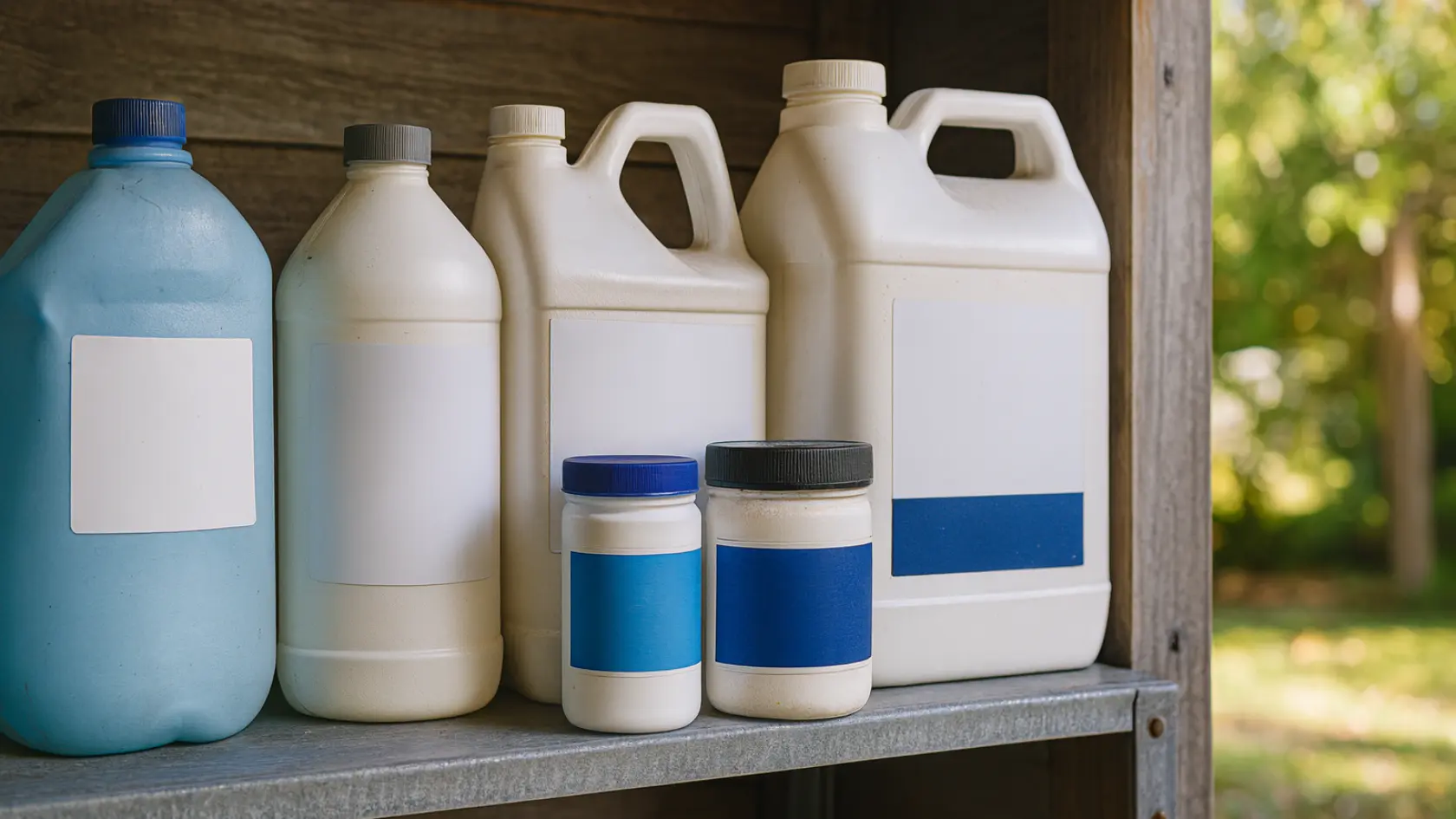
1. Check All Containers Before You Store Them
Before putting anything away, inspect your pool chemical containers for cracks or leaks, damaged lids or torn labels, moisture exposure or clumping inside, and signs of chemical reaction (swelling, fumes, or discoloration).
If anything looks compromised, do not store it. Follow your local guidelines for chemical disposal, or contact your local pool retailer for safe disposal options.
2. Keep Chemicals in a Cool, Dry, Well-Ventilated Space
Temperature and humidity have a big impact on how chemicals behave over time. Aim for a storage location that is cool but stays above freezing and dry, with no standing water.
Do not store pool chemicals:
- In garages with temperature swings
- In sheds that freeze in winter
- Near furnaces, hot water heaters, or electrical panels
- In airtight plastic storage bins, they can trap dangerous fumes and create unsafe conditions
A dedicated storage cabinet in a utility room or covered outdoor structure with good airflow is ideal.
3. Never Stack or Mix Chemicals Together
Certain pool chemicals, especially oxidizers and acids, can react violently if they come into contact with each other, even when they’re dry. Keep all products stored separately and upright, with lids tightly closed.
Here are some additional important safety tips to help keep your chemicals separate and safe:
- Never stack different types of chemicals on top of each other.
- Don’t store acids next to chlorine or shock.
- Use separate shelves or bins for different chemical types.
- Never reuse containers or transfer products to unlabeled bottles.
4. Keep Everything Clearly Labeled and Accessible
Make sure the label on every product is visible and legible so you can check expiration dates and avoid confusing products that have similar packaging. It also ensures that you can safely follow dosing directions when you reopen your pool in the spring.
If possible, consider keeping a small inventory list of what’s being stored so you can restock accurately next season without unnecessary purchases. If a label is faded or missing, it’s safest to dispose of the product entirely.
5. Store Liquids and Solids Separately
Some pool chemicals are more sensitive to cross-contamination than others. Liquids and solids should never be stored in the same bin or directly next to each other, even if they’re in sealed containers.
Keep in mind:
- Vapors from one container can react with another nearby.
- Spills are harder to manage in mixed-storage setups.
- Organizing by type also makes inventory and spring setup easier.
6. Keep Chemicals Away from Kids, Pets, and Food
Pool chemicals can be extremely dangerous if ingested, inhaled, or spilled, especially chlorine-based products and acids. So remember to store them in a locked cabinet or closet, away from pet supplies or food storage, and behind barriers or at a height that prevents child access.
If you use a garage or shed, make sure it has a secure lock and a clear “no entry” policy for children.
7. Don’t Assume They Last Forever
Most pool chemicals have a shelf life, even when they’re stored properly. Exposure to moisture, heat, or air can shorten that shelf life further. Keep an eye out for:
- Clumping in granules or powders
- Fading or separated liquids
- Discoloration, strange smells, or corrosion near caps
If you notice any of the above, it’s better to dispose of the product safely than risk damaging your pool or equipment next season.
Final Thoughts on Safe Pool Chemical Storage
Safely storing your pool chemicals isn’t just about preserving product quality; it’s about protecting your home, your family, and your investment in your pool.
Taking a few minutes now to check containers, organize storage, and follow best practices can help you start strong next spring with everything you need in good condition.
When in doubt, store separately, label clearly, and always follow manufacturer guidelines. It’s a simple step that makes a big difference in safety and peace of mind.
